
A core feature with about 8% adoption
Of the 13 people at the salon, almost only the owner used online booking. Everyone else used what they had to: checkout and supply requests.
When the owner first showed me the back office, I could see why. The menus were written for someone analyzing a business, but stylists spend their days on their craft, not behind a screen.
So I built a replacement for this hair and tattoo salon. It is deployed and in acceptance testing with the owner, not live yet.
Designed from inside a salon
I worked in a hair salon for a year, long before this project, so I know how the day runs: how many clients can overlap with an assistant, when a client needs one-to-one time, and when it doesn't matter. When the owner suggested adjusting capacity to the day's assistant count, one sentence was enough.
Built with the owner
The owner’s feedback shaped the rules as well as the screens.
Households often share one phone.
Customers have separate identities even when they share a contact number.
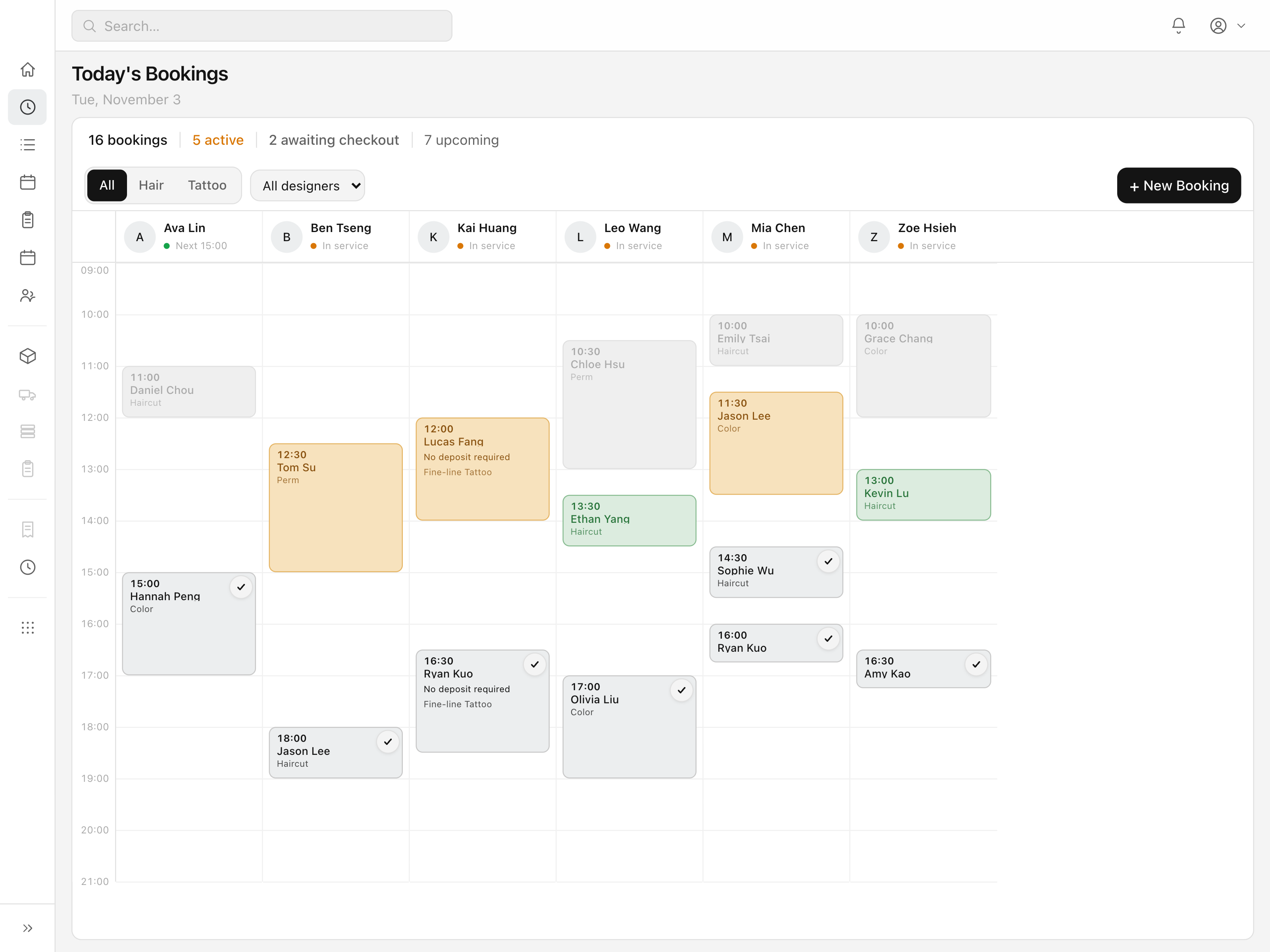
The new system's booking card feels cramped on a desktop with a mouse.
The redesigned card gives content room to scroll, keeps actions in place and adds service search.
Colour treatments include waiting time when the stylist can take the next client.
Bookings distinguish busy time from waiting time. Staff can book in the gap, with capacity checks and explicit confirmation for conflicts.
Three decisions
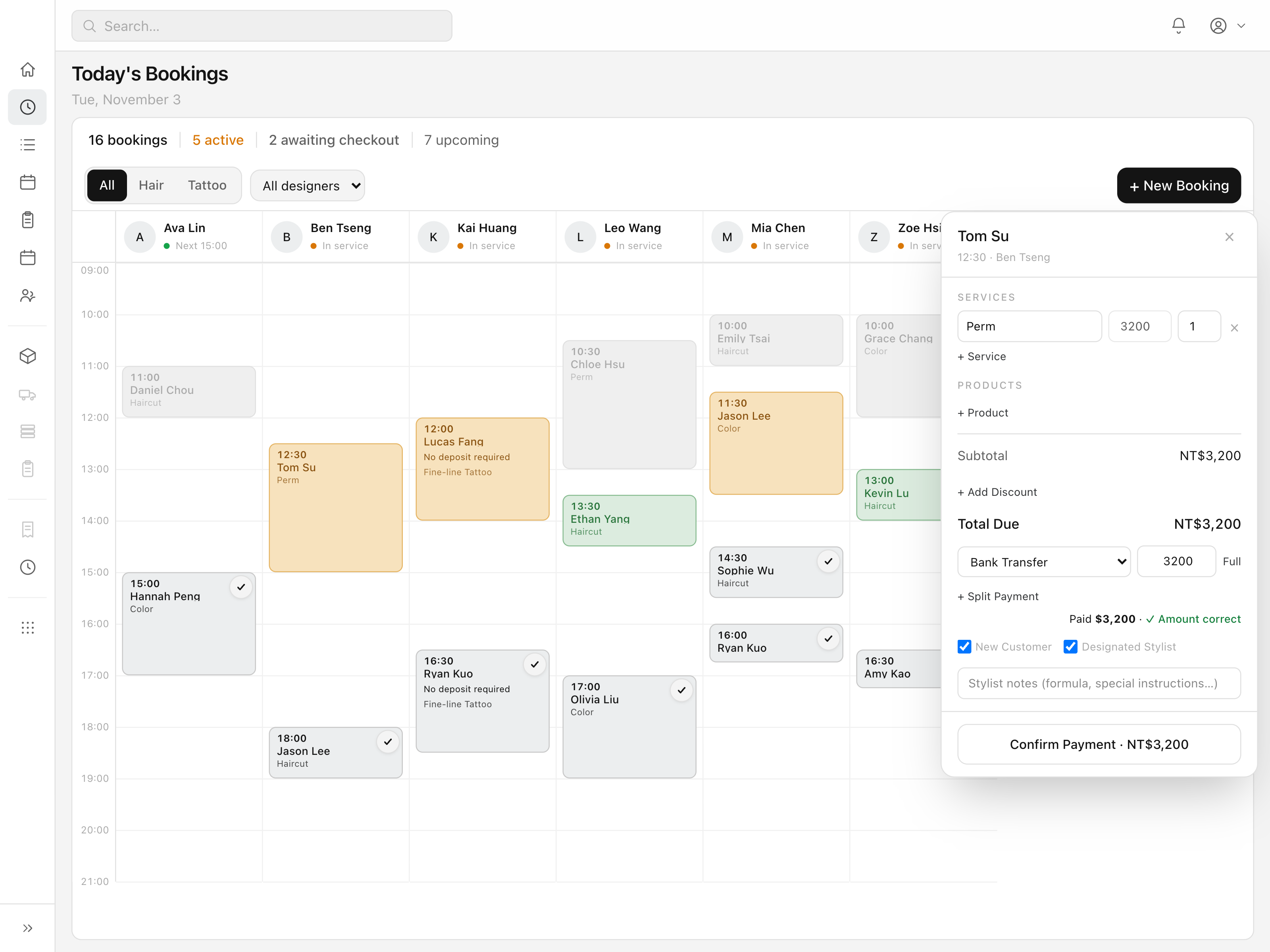
Lock the rate at checkout
The new system saves the commission rate on each line item at checkout so later rate changes cannot alter commissions already recorded.
The rate is saved when payment is confirmed. This screenshot shows the step before confirmation.
The sale follows the service
Credit each service to the stylist who performed it so reception can handle checkout without receiving the sale.
Access follows the account
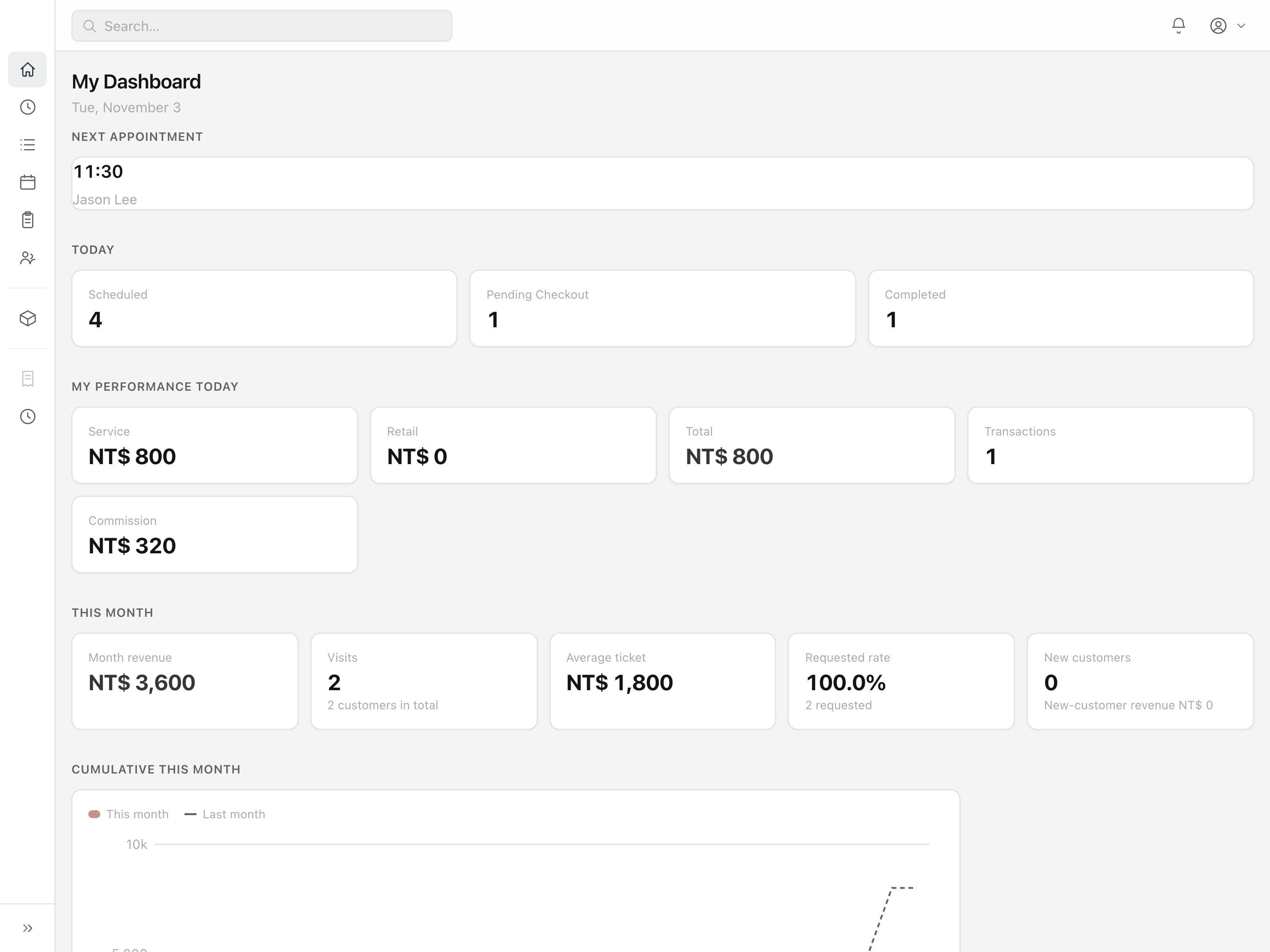
Control access through account permissions independently of job title so reception can manage bookings and checkout without access to finance, reports or staff management.
The stylist dashboard shows personal bookings, earnings and commission. Permissions also govern access elsewhere in the system.
New capabilities
Capabilities added beyond the old POS. Built, with acceptance testing in progress.
- Web bookingBook on the salon's site, not just LINE.
- Tattoo depositsUnpaid holds release after 48 hours.
- Book during processingTake the next client while colour sets.
- Connected online shopOrders and stock share one back office.
- Online shift changesStaff request, the owner approves.
- Materials per serviceLogged on each service, with defaults.
- Reorder suggestionsLow stock flags it, the owner approves. Vendor email next.
- Stylist and artist pagesProfiles on the salon's website.
- AI chatAsk questions about the business data.
- Capacity by assistantsDaily capacity follows the assistants on shift.
Workflow fixes
Cashbook
Cashbook typed in by hand
Ledger entries written from checkout.
AUTOMATICAccess
The old POS's web version had limited features
The full system runs in a browser on any computer.
Expected impact
Not live yet. These are the outcomes the system is designed for, to be measured after launch.
- More of the team actually using itBefore, almost only the owner used online booking, about 8% of the team. This is the first number to measure after launch.
- More clients per stylist dayProcessing gaps can be booked.
- Fewer empty tattoo slotsDeposits and automatic release of unpaid holds.
- Revenue beyond the chairOnline shop orders land in the same books.
- Fewer stock surprisesShop and salon share one stock count, and low stock triggers a reorder suggestion.
- Lower running costThe old POS cost about NT$100,000 over two years. The new system targets under NT$1,300 a month; actual costs will be measured after launch.
Status and what’s next
Deployed and in acceptance testing with the owner. Not live yet.
The evidence is internal testing with the owner and demo data. Final acceptance is still pending.
What’s next
Still to complete:
Roadmap
Project start
ERP foundation for the salon and storefront.
Calendar and booking
Calendar, shared attendance kiosk and online booking.
Export and permissions
Full ZIP export and per-staff permission overrides, following July’s privacy work.
Monthly payroll
Payroll merged and applied to the shared database.
LINE and shop
LINE booking, bank checkout, coupons and order email.
Integrated operational release.
Parallel-time booking
Busy and waiting periods, capacity checks and explicit confirmation. Updated calendar views.
Built with AI coding agents: 1,414 commits, 52 design decisions recorded, 226 database migrations.